Seismic engineering services in Corona, California, encompass a comprehensive suite of geotechnical evaluations designed to safeguard structures and infrastructure from earthquake-induced hazards. This category covers everything from regional seismic hazard assessments to site-specific ground response analyses, addressing the unique challenges posed by the region's complex tectonic setting. Given Corona's location within the seismically active Southern California region, near major fault systems like the San Andreas and Elsinore faults, understanding and mitigating seismic risk is not just a regulatory requirement but a fundamental necessity for public safety and long-term asset resilience. These services are critical for ensuring that new developments and existing structures can withstand the dynamic forces generated during a seismic event, protecting both lives and investments.
The local geology of Corona significantly influences seismic risk, characterized by alluvial basins, weathered bedrock, and areas with shallow groundwater tables. These conditions can amplify ground shaking and trigger secondary hazards such as soil liquefaction, lateral spreading, and seismically induced landslides. A key component of this category is seismic microzonation, which maps variations in ground motion potential across the city, accounting for site-specific soil profiles and basin effects. This detailed mapping is essential because shaking intensity can vary dramatically over short distances, directly impacting structural design parameters and land-use planning decisions. Without such localized analysis, projects risk underestimating the true seismic demand on their foundations and superstructures.
Regulatory compliance in Corona is governed by the California Building Code (CBC), which adopts and amends the International Building Code (IBC) with state-specific seismic provisions. Chapter 16 of the CBC mandates site-specific geotechnical investigations for most structures, requiring analysis in accordance with ASCE 7 standards for seismic design categories determined by the site's soil classification and proximity to active faults. Additionally, the California Geological Survey provides regulatory maps identifying zones of required investigation for liquefaction and earthquake-induced landslides under the Seismic Hazards Mapping Act. Our services ensure that projects fully adhere to these rigorous standards, from preliminary desktop studies to final foundation design recommendations, facilitating smooth permit approvals and code-compliant construction.
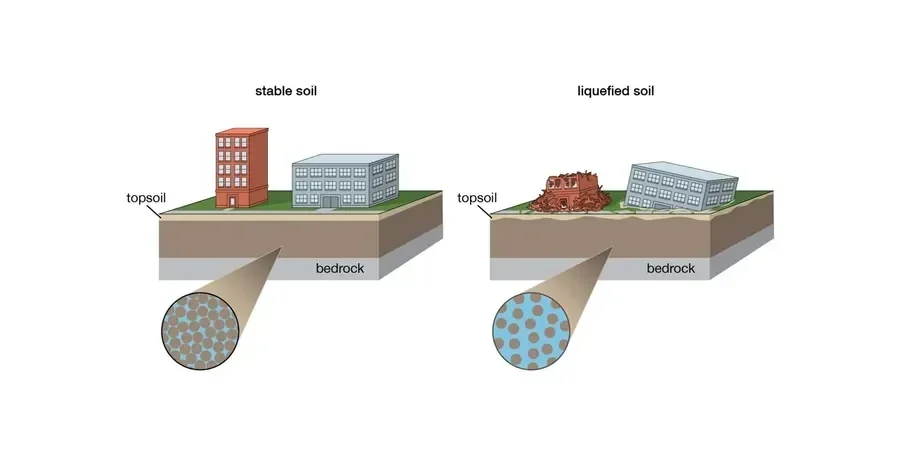
A wide range of projects in Corona necessitate these specialized seismic services, from large-scale residential subdivisions and commercial complexes to critical infrastructure like hospitals, schools, and transportation corridors. High-occupancy and essential facilities often require advanced analyses, such as soil liquefaction analysis, to evaluate the potential for ground failure that can undermine foundations and rupture utilities. This analysis is particularly vital in areas with loose, saturated sandy soils, which are prevalent in parts of the Santa Ana River floodplain. Whether assessing a single-family home on a hillside or a multi-story industrial warehouse, integrating seismic considerations early in the design process optimizes structural performance and avoids costly retrofits later.
Quick answers
What is the difference between a site-specific seismic hazard analysis and using standard code values?
A site-specific analysis refines the generalized code values by incorporating local soil properties, basin effects, and fault proximity through detailed subsurface investigation and ground response modeling. This often results in a more accurate and potentially less conservative design spectrum, optimizing structural costs while ensuring safety, whereas standard code values provide a broader, more generic estimate that may not capture local amplification effects.
When is a seismic microzonation study required for a development in Corona?
A microzonation study is typically required for large-scale developments, master-planned communities, or public infrastructure projects where understanding the spatial variation of ground shaking is critical for planning and design. It is also triggered by the presence of complex geologic conditions, such as deep alluvial basins, that can cause significant differential ground motion across a site, as identified during preliminary geotechnical investigations.
How does soil liquefaction affect building foundations and what can be done to mitigate it?
Liquefaction causes saturated, loose soils to lose strength and behave like a liquid during shaking, leading to settlement, tilting, and flotation of foundations. Mitigation strategies include deep foundations that bypass the liquefiable layer, ground improvement techniques like vibro-compaction or stone columns to densify the soil, or designing flexible utility connections to accommodate ground deformation.
What are the key steps in a comprehensive seismic geotechnical investigation for a new commercial building?
A comprehensive investigation begins with a desktop review of geologic maps and fault databases, followed by subsurface exploration through borings and geophysical testing to classify soil types and measure shear wave velocity. This data feeds into analyses for site class determination, liquefaction potential, and seismic slope stability, culminating in a report that provides foundation design parameters, ground motion acceleration, and specific construction recommendations per CBC and ASCE 7.